
Outcome
8 > 4
Cut the total number of screens for all users
–1.5 pp
Reduced churn despite having fewer steps in the flow
Solution #2
A year earlier, we started exploring how an ML model could make the cancellation flow more effective. The idea was to identify users by their PUID and show them the most relevant screens based on their behavior.
In this experiment, we didn’t reduce the number of screens but used ML to personalize their order according to each user’s subscription patterns.
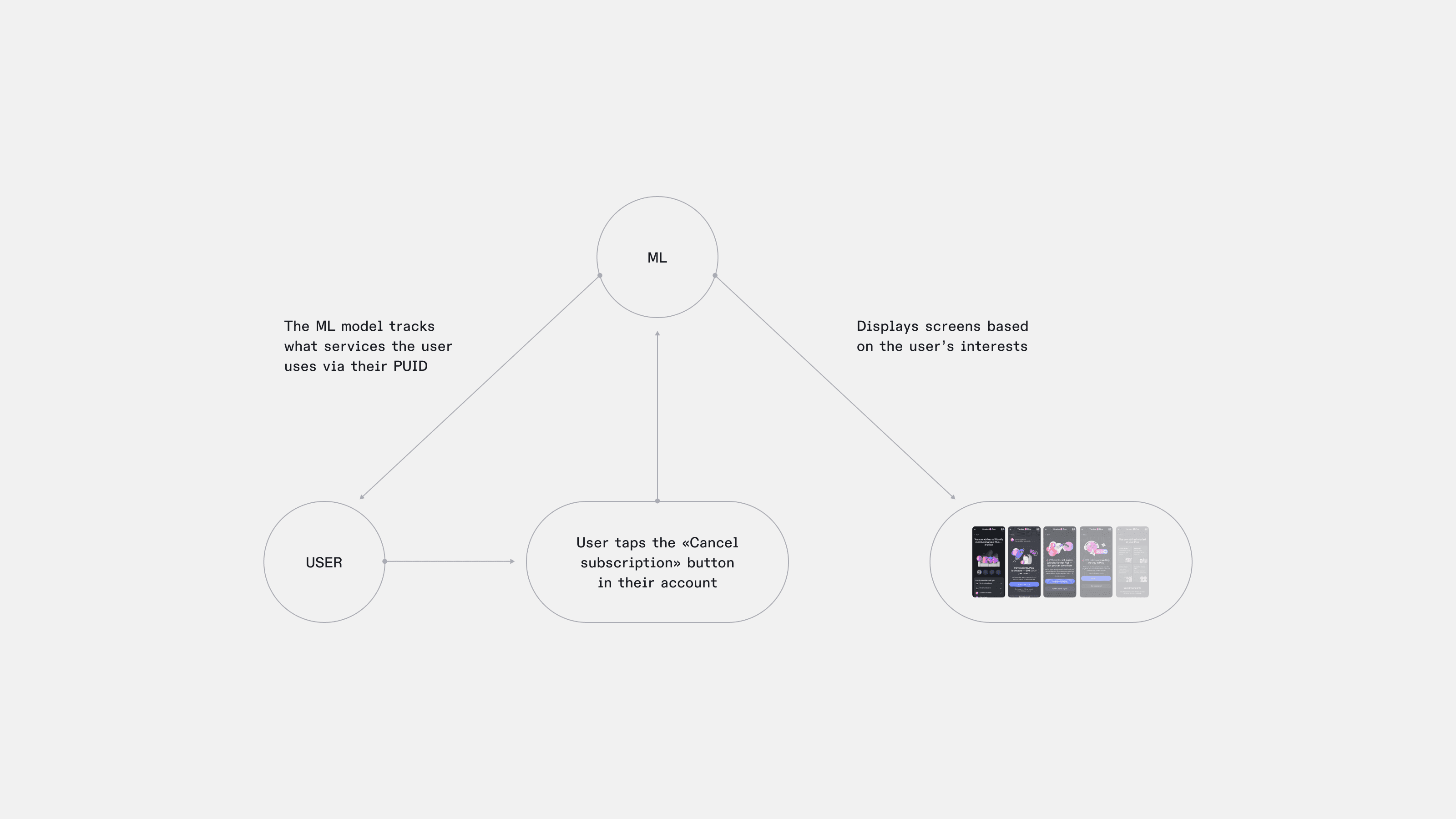
Simplified ML workflow scheme.
To make the ML model truly personalized, it needed a large database of screens to match different user segments.
Together with the Product Manager, we defined key segments and brainstormed what value to show each one. For example, favorite artists for music lovers or unfinished series for movie fans.
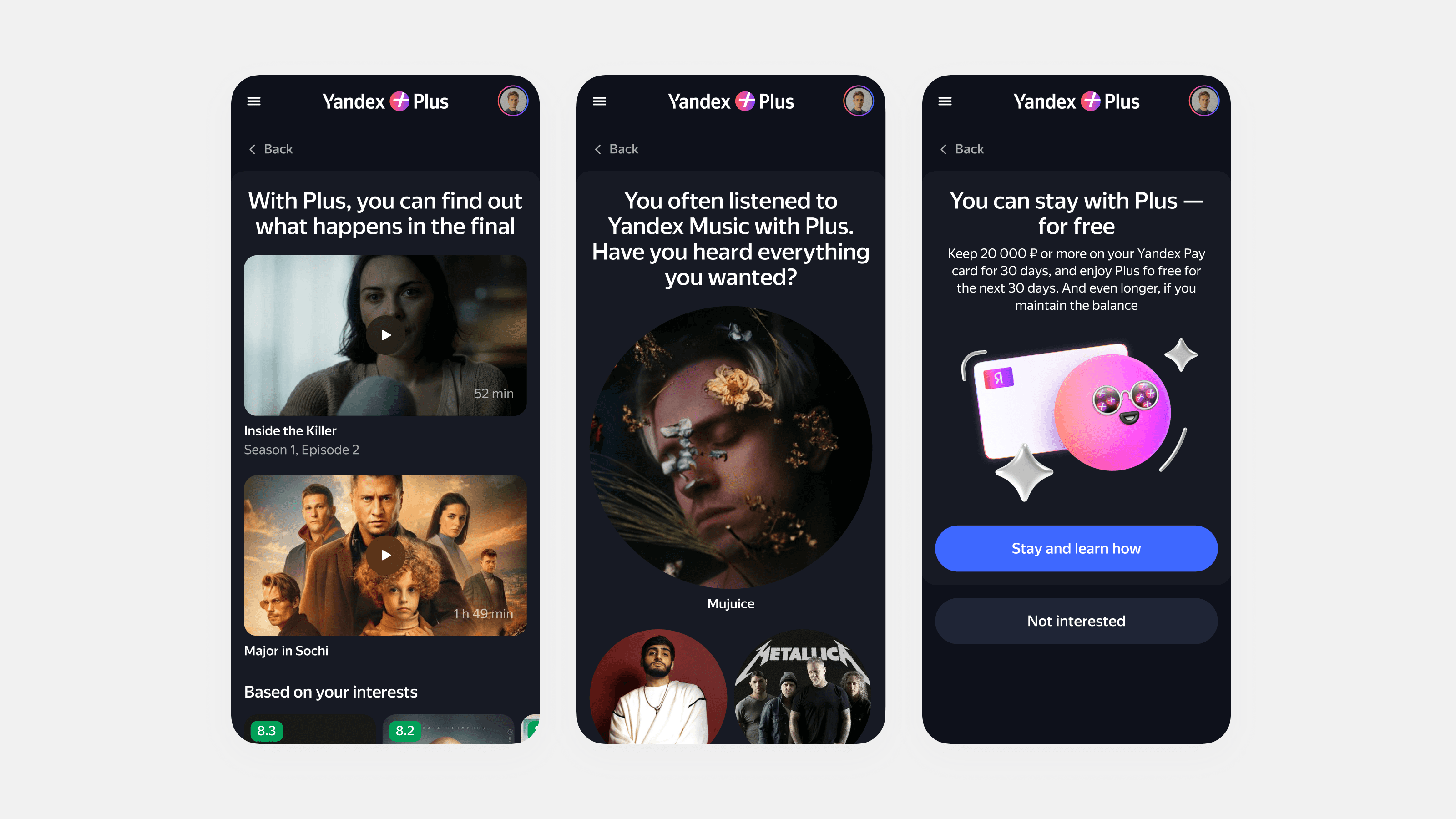
Early ML concepts that never reached production.
A series of successful ML experiments helped us better match user interests and cut the number of screens by half, while also improving churn.
Research
Together with our in-house research team, we ran seven moderated usability tests. The goal was to understand how users reacted to the new flow, how they interpreted the wording, and to spot any weak points in the solution.
Faces blurred for privacy.
Key takeaways from the interviews:
Users often start cancellation without a clear reason. The wizard helps them navigate options and understand what’s actually bothering them
Insight #1
When there are too few options, users choose the closest match instead of the real reason. More choices lead to more accurate answers
Insight #2
Many users don’t fully understand the value of points and cashback. Showing that value at the right moment helps them reconsider
Insight #3
Most copy is clear, but “Plus is not working well” is too vague and gets interpreted in different ways
Insight #4
We decided to go with five answer options since developing six was estimated
at 28 story points. It didn’t make sense to invest that much effort in an experiment with uncertain results, so we launched an A/B test with 5% of the cancellation flow audience.
Result
This experiment failed.

We saw a slight churn increase and a statistically significant short-term retention drop. Long-term impact was neutral
Solution #1
Together with my product manager, we brainstormed and wondered: what if we let users choose their reason for canceling at the start, then show only the most relevant screens?

Hypothesis
The CTR of individual screens will improve if we show users the most relevant ones at the beginning of the flow instead
of later in the process
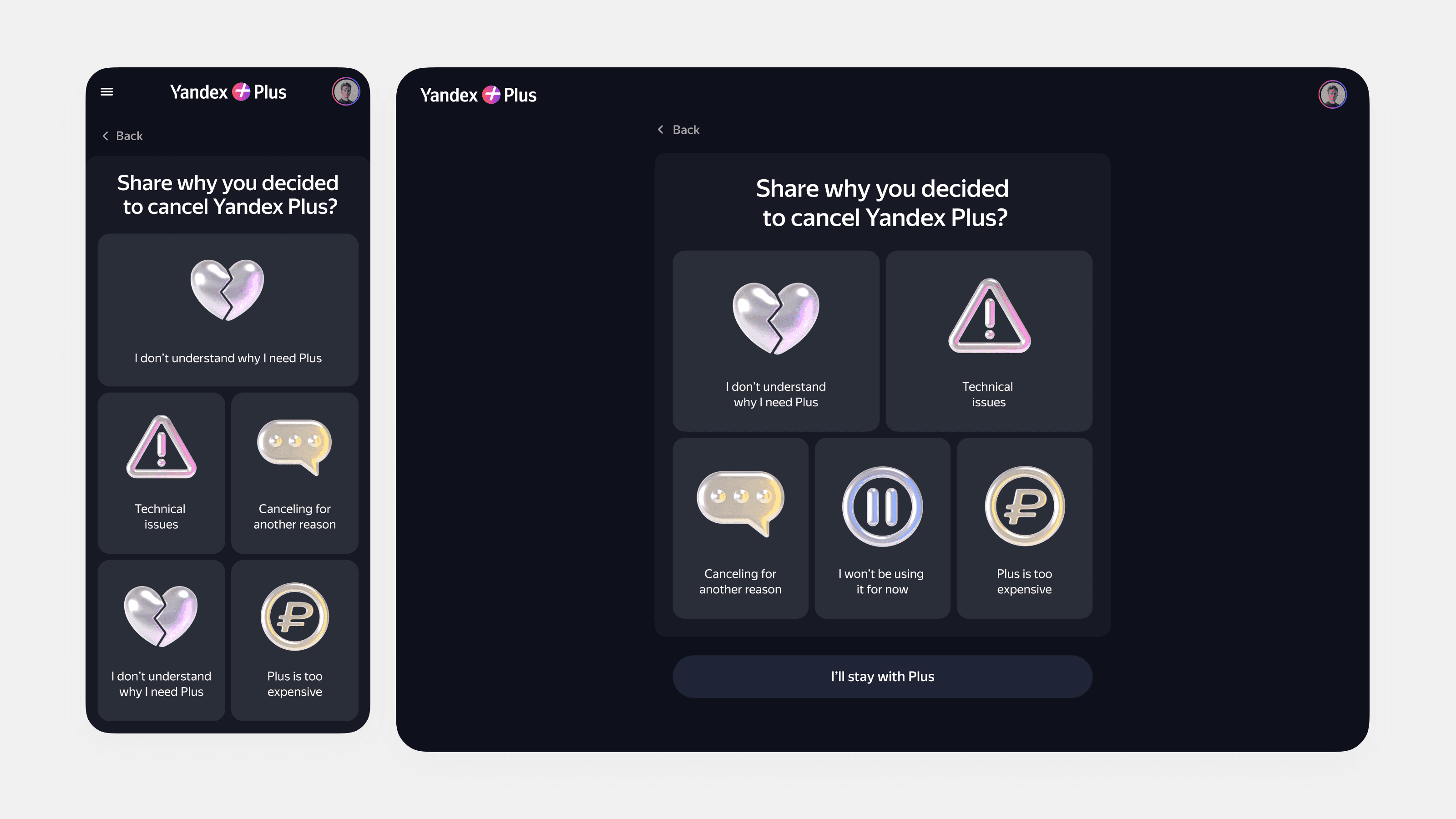
Cancellation survey. Each reason opens its own flow.
The experiment tested changing the order of screens based on the user’s cancellation reason. For example, users who chose “I don’t see the value” saw the subscription benefits first. Those who selected “I won’t use it for now” were offered to freeze their plan for a month.
We also arranged the answer options from free to paid. Since discounts and rewards cost the business money, monetary offers were placed at the end, while the freeze option affects the time until the next billing.
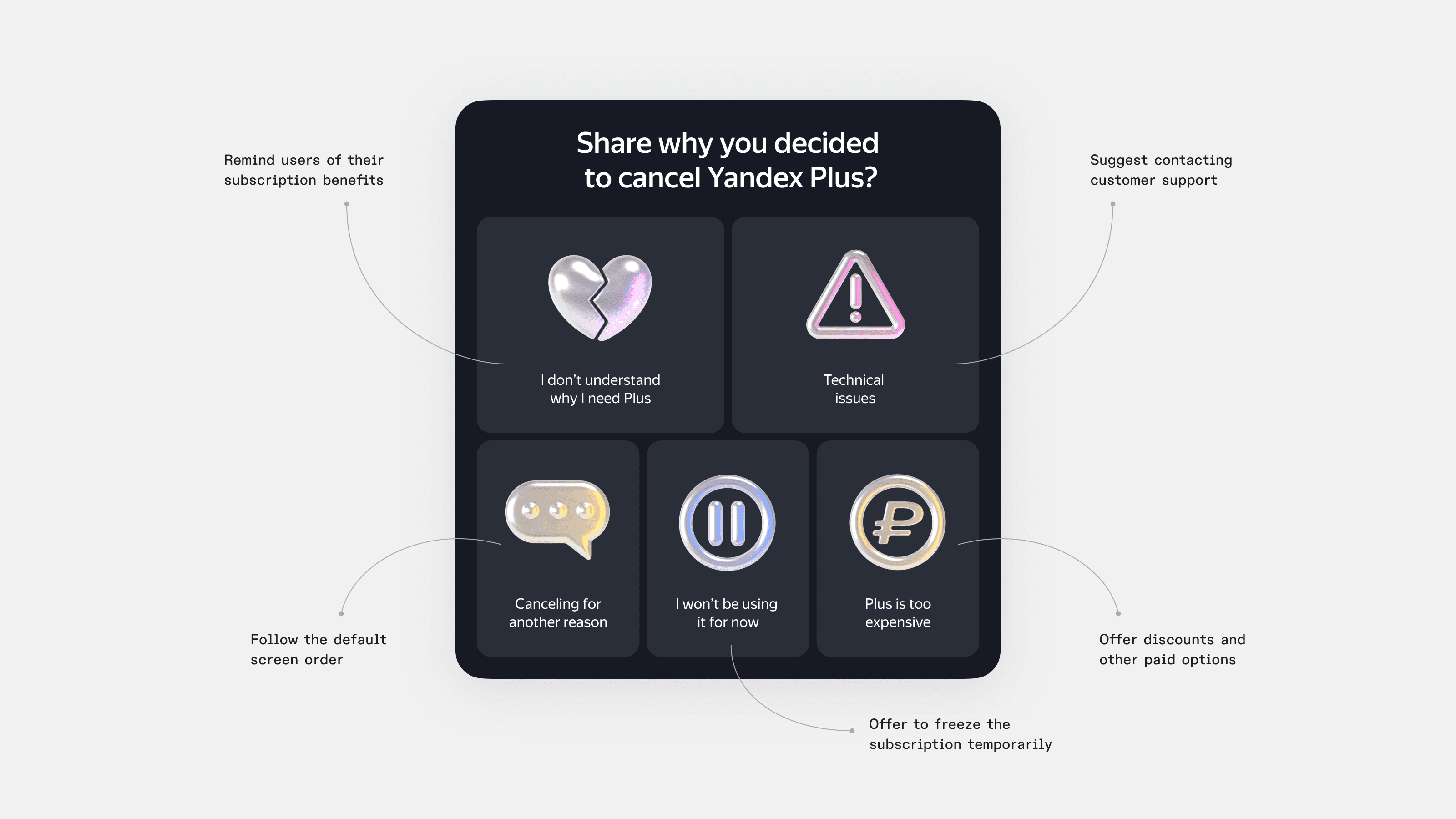
The context and screen sequence are ranked based on the selected reason.
The goal was to make the process more relevant and efficient by showing users the most relevant screens first, so they wouldn’t have to go through all 10 steps and we could improve retention.
We discussed the number of response options to provide, the wording that would cover all reasons for canceling subscription, and the setup for launching the experiment.
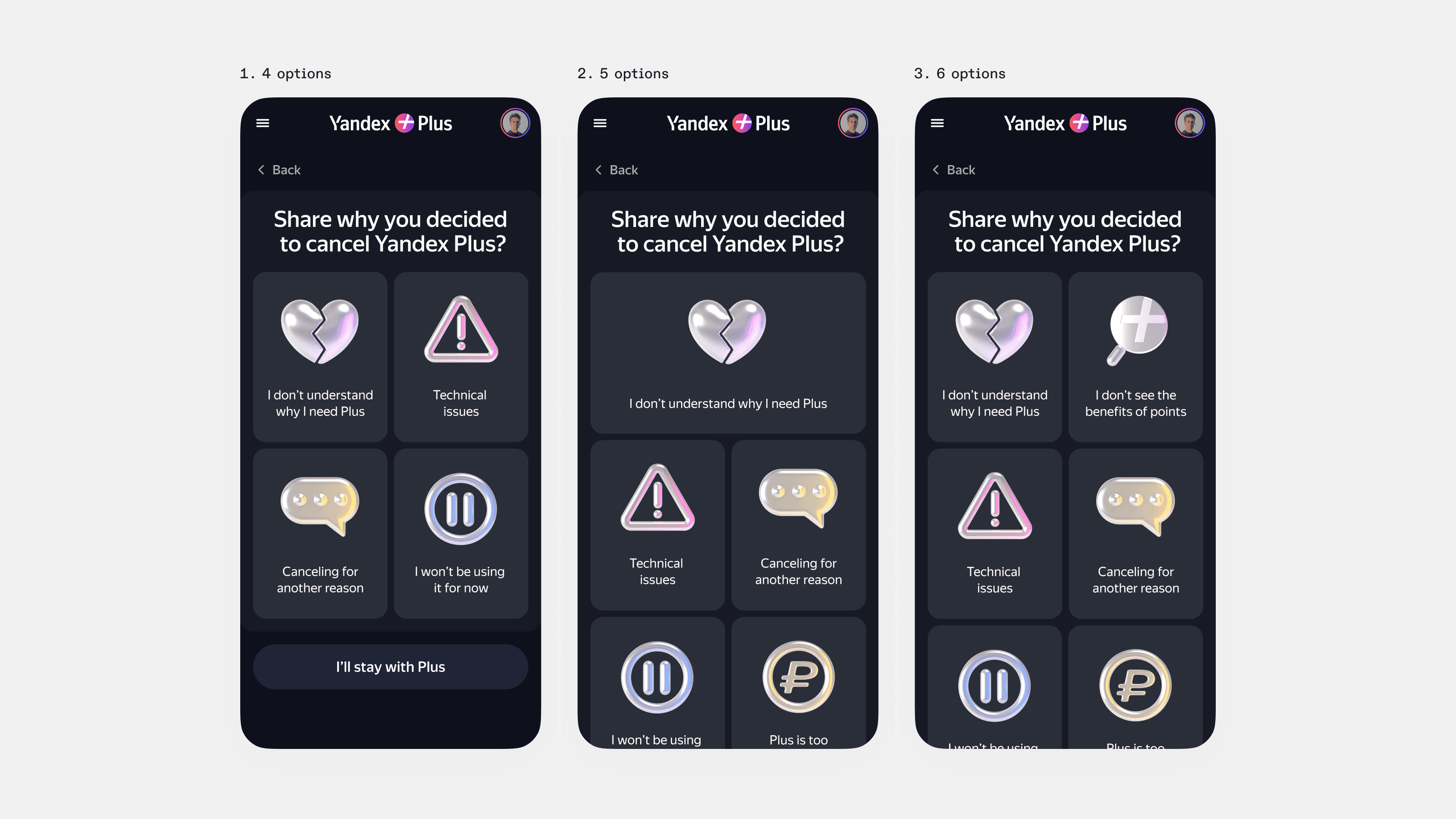
The context and screen sequence are ranked based on the selected reason.
Challenge
The cancellation flow is central to how we manage Churn rate . With high daily traffic, even small tweaks can noticeably impact results. The challenge was to simplify the flow without increasing key metric while addressing user complaints about complexity and relevance.
Product challenge
Simplify the cancellation process by making each step more relevant while keeping it effective in retaining subscribers
Business challenge
Improve user satisfaction and loyalty, and strengthen brand trust for long-term retention
Audience
Users going through the cancellation flow (~60K daily)
Our team setup
Product Designer (myself), Product Manager, UX Researcher, Technical Manager, 3 Developers, 3 QA Engineers, 2 Analysts
Problem statement
The cancellation flow doesn’t account for important factors like which benefits users actually used. Because of that, people often see irrelevant screens, making the process feel long and frustrating. Many saw this as intentional friction, which hurt trust and showed the need for change.
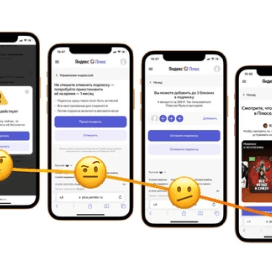
Our research team identified the issue after studying the cancellation experience and reviewing user feedback from social media and public platforms. Here are a few examples:
Background
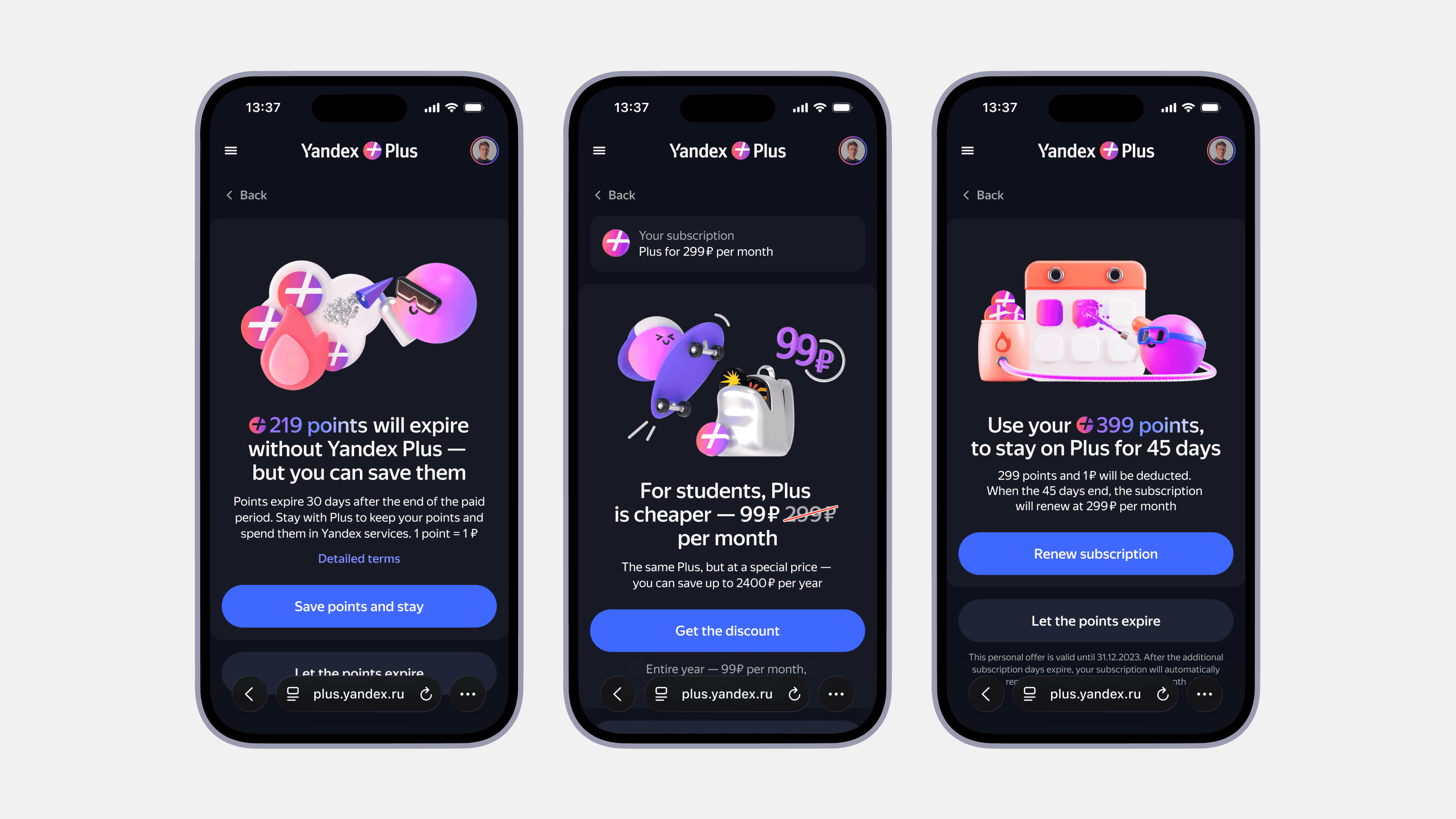
About 60,000 people start the Yandex Plus cancellation flow every day, going through 8 to 10 screens that explain the process and offer softer options like freezing the plan or using bonus points.
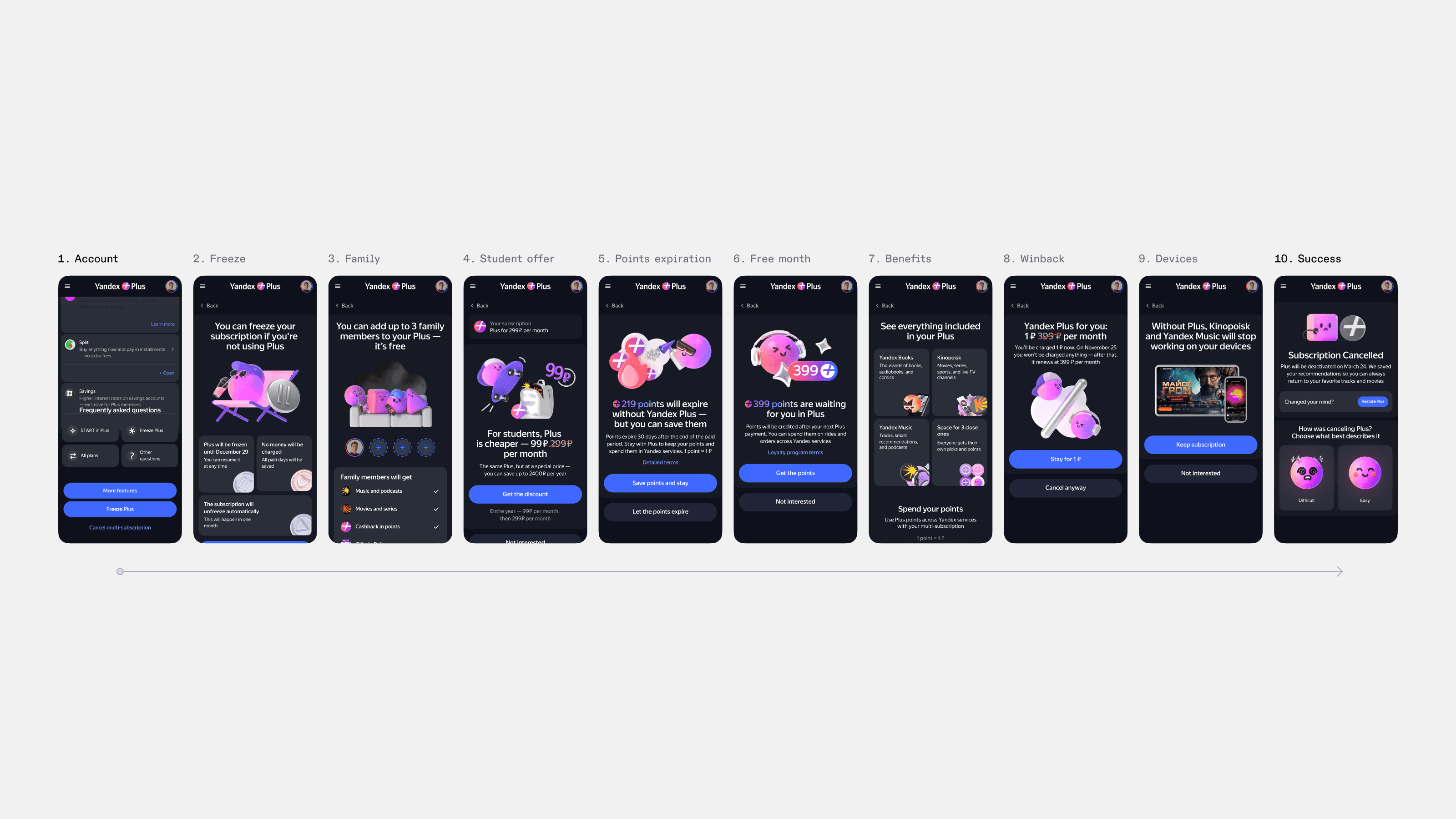
Canceling a subscription means going through all the screens.
The cancellation flow can’t reorder screens dynamically for each user. Instead, it follows fixed “if” rules. For example, if someone already used a discount during a previous cancellation attempt, they won’t see that offer again for six months.
Foreward
Yandex Plus is a subscription service with over 41 million paying users, providing unlimited access to music, books, movies, and TV shows.
Canceling a subscription is one of the most sensitive moments in the user journey — it directly affects trust and churn rate.
As a Senior Product Designer leading the Churn domain, I worked on simplifying this experience, making it friendlier and easier for users while keeping key business metrics stable.
Behind the scenes
A short talk from our ML engineer explaining how the model was built and integrated into the cancellation flow. The talk is in Russian with English subtitles.
Mar 2024 — Aug 2024
Simplified subscription cancellation for over
41 million users
–1.5 pp churn, x2 fewer steps